Forklift Safety Cage vs Scissor Lift: Which One Should You Choose?
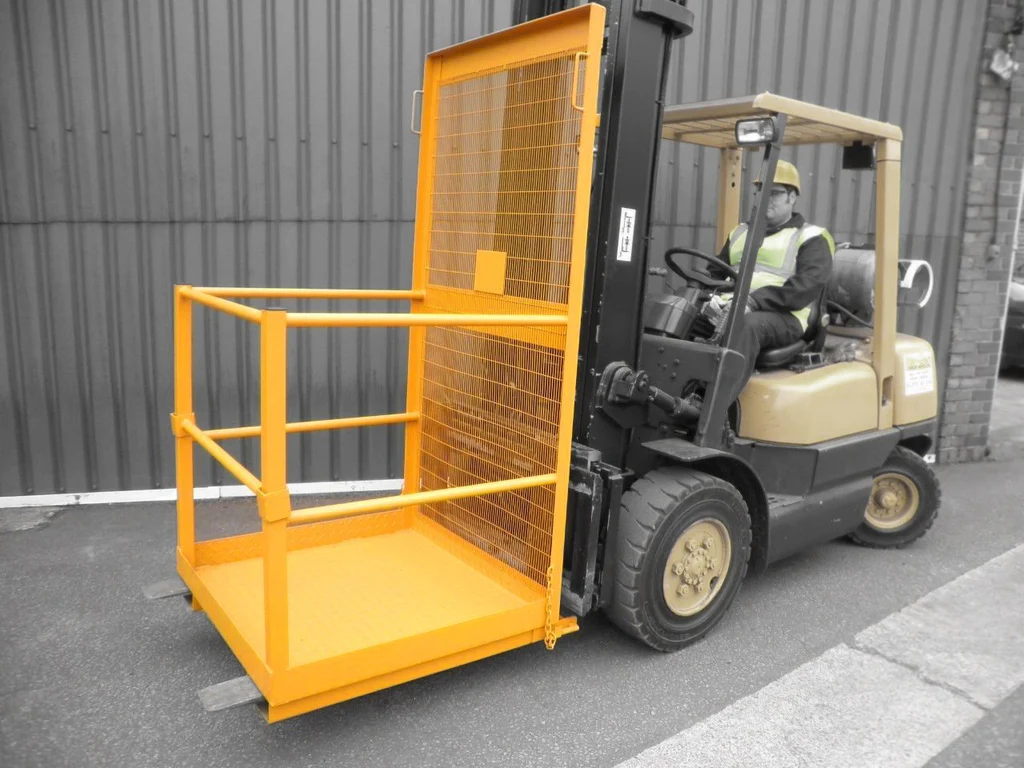
Many industrial and warehouse jobs involve working from height. From stock selection to room upkeep, companies have a need for dependably dependable options. Forklift safety cages and scissor lifts are two of the most common ways. They both assist workers in accessing high spaces, but they are used for different applications. In a number of cases, the decision between them can keep cost-effective operations running efficiently, on top of affecting worker safety and compliance with workplace regulations.
Which one you choose depends on your work, budget and safety requirements.
What Are Forklift Safety Cages?
Forklift safety cages are platforms that can connect to a forklift. They permit the safe lifting of workers for temporary jobs at height.
They are often used for:
- Maintenance work
- Stock checks
- Light repairs
- Occasional elevated access
These cages are part of the wider range of material handling equipment and can provide effective cost saving solution where a forklift is already in place.
What is a Scissor Lift?
Vertical lifts are dedicated machines for vertical lifting, most prominently scissor lifts. It employs a crisscross mechanism to lift and lower a platform.
Scissor lifts are used for:
- Construction work
- Long-duration tasks
- Frequent elevated operations
- Occupations that demand additional room in addition to seclusion
Unlike the traditional forklift safety cage, scissor lifts are self-contained machines designed specifically for height work.
Key Differences Between the Two
Knowing how these options differ can help you decide.
Cost and Investment
- Forklift safety cages are more economical. They run on existing forklifts, which lowers capital expenditures.
- Scissor lifts are a much bigger investment and require maintenance.
Flexibility
- The cages can be mounted and unmounted quickly.
- Scissor lifts are not as flexible but more specialised.
Safety Features
- Scissor lifts come with integrated guardrails, controls, and emergency systems.
- The security of these safety cages depends on the way the forklift is handled and whether it is securely attached or not.
Frequency of Use
- Occasional tasks are perfect for cages.
- Scissor lifts are ideal for frequent work, high up.
When Forklift Safety Cages Are a Good Idea?
Forklift safety cages are a sound investment for many businesses, particularly those with limited budgets.
They work best when:
- Tasks are short and infrequent
- A forklift is already in use
- Space is limited
- Work height is moderate
As aspects of your material handling equipment, they provide a simple method to improve your forklift’s purpose without significant expense.
When a Scissor Lift Is the Way to Go?
Scissor lifts are a better investment for more demanding environments.
Select a scissor lift when:
- Workers work for longer periods at height.
- Tasks need extra space for platform
- Safety regulations are stricter
- Work is frequent, as well as repetitive
In these cases, relying only on forklift safety cages may not achieve the expected standard of safety or efficiency.
Safety Tips You Must NEVER Overlook
Whatever option you choose, safety should be the priority.
The main points to keep in mind:
- Always follow Australian safety standards
- Ensure equipment is regularly inspected
- Train operators as well as workers properly
- Never exceed load limits
Forklift scissor lifts are less safe than forklift safety cages. These problems stem from abuse or poor training.
Final Verdict: Which Is Better?
There is no one-size-fits-all answer. Which is the better option for you really just depends on your needs.
Select forklift safety cages for flexibility, low-cost, and infrequent jobs.
If high-frequency use as well as better safety features and work-at-height duration is required, go for a scissor lift.
Most businesses should evaluate before they pay. The right material handling equipment won’t just enhance efficiency; it will also keep your team safe.
Ultimately, the correct answer provides the best balance between safety, cost, and practicality in your workplace.